
 2 hours ago
588
2 hours ago
588

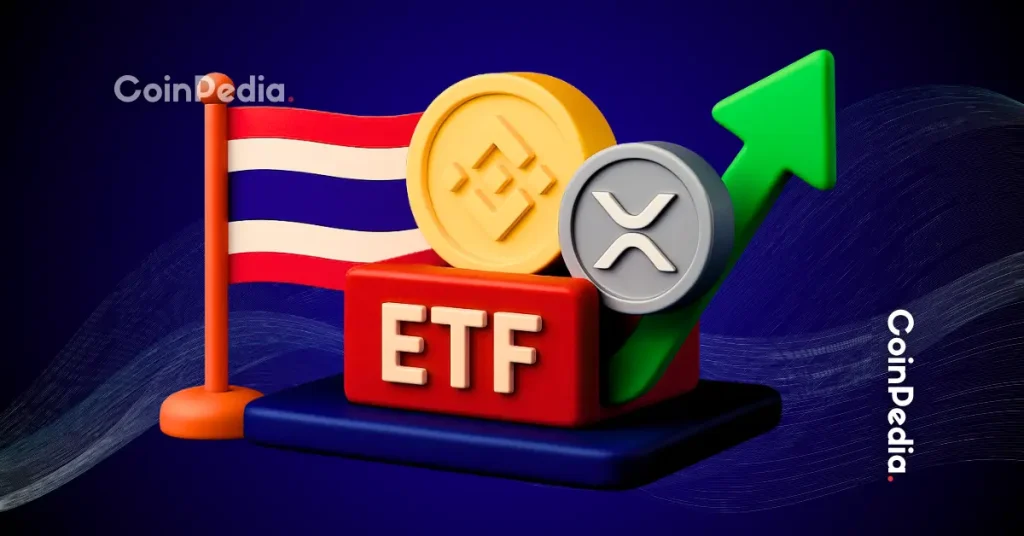
The Securities and Exchange Commission (SEC) is advancing Thailand’s derivatives market by expanding permissible underlying products under the Derivatives Act B.E. 2546 (2003) to include digital assets and carbon credits.
This move follows the Cabinet Meeting on February 10, 2026, which accepted the Ministry of Finance’s proposal to advance the development of the Thai derivatives market in line with global markets. It also aims to ensure that related services are operated under a proper supervisory framework, thereby reducing risks and improving investor protection.
Thailand’s SEC strengthens digital assets in the derivatives market
The status of cryptocurrencies as an investment asset class within Thailand’s official capital markets framework would be strengthened under the new regime, enabling them to serve as underlying instruments for regulated derivatives products.
Mrs. Pornanong Budsaratragoon, SEC Secretary-General, stated that the Derivatives Act’s expansion of acceptable underlying assets and instruments is intended to accommodate new types of underlying products, such as digital assets. She added that the goal of this action is to improve the likelihood that digital assets will stand as an investment asset class.
Budsaratragoon also stated that this development will extend investment opportunities for a wider range of investors, facilitate diversification and more effective risk management, and support more inclusive market growth.
“In addition, determining carbon credits as goods—rather than variables—enables the introduction of physically delivered futures contracts, in addition to cash settled contracts, through the derivatives exchange regulated under the Derivatives Act.”
–Mrs Pornanong Budsaratragoon, SEC Secretary-General.
The strategy aligns with the ideas stated in the proposed Climate Change Act B.E. 2546 (2003), she highlighted. Mrs Budsaratragoon emphasized that it will also advance the nation’s carbon-neutrality aspirations by encouraging the exchange of carbon credits.
Thailand’s SEC signaled an effort to incorporate cryptocurrency more directly into the nation’s regulated investing environment on January 19, 2026. It unveiled a three-year capital markets plan that includes tokenization projects and the creation of cryptocurrency exchange-traded funds.
The regulator said Wednesday it will draft follow-up rules to facilitate related business operations. The SEC revealed that one such need will be to update derivatives business licenses to permit operators of digital asset businesses to issue derivative contracts that reference digital assets.
Thailand’s SEC also stated that it will examine the licensing structure and supervisory standards that apply to the derivatives exchange and clearing house to ensure they are appropriate for new types of underlying products.
The SEC said it will work with the Thailand Futures Exchange Public Company Limited (TFEX) to determine the specific contract requirements for the product, particularly for derivative products referencing digital assets.
Thailand’s digital asset market sees rapid growth
Pichapen Prateepavanich, policy strategist and founder of infrastructure firm Gather Beyond, stated that digital assets already function as financial instruments in practice. She noted that Thailand’s SEC is aligning regulations with market realities by expanding the Derivatives Act. It places action inside a well-defined legal framework, she highlighted.
Prateepavanich further argued that if digital assets are designed correctly, they can enhance liquidity, promote institutional participation, and offer hedging opportunities; if not, markets stay shallow and reactive.
Prateepavanich also noted that broadening the scope without further strengthening capital requirements and disclosure rules would raise systemic risk.
According to Prateepavanich, the rule of law and investor protection should be the cornerstones of innovation. If appropriately implemented, the reform might strengthen Thailand’s standing as a serious jurisdiction.
The cryptocurrency market in Thailand is booming. The SEC evaluated the domestic market at $3.19 billion (TBH 100 billion) in August of last year, with an average daily trading volume of $95 million (THB 2.99 billion).
The number of active accounts increased to 230,000, a surge of 8.44% from July’s 213,000 accounts.
Individual investors continued to dominate the Thai market in August 2025, accounting for 42% of the investor base. Foreign legal entities came in second with 25%, followed by domestic legal entities with 18% and foreign individual investors with 15%.
Don’t just read crypto news. Understand it. Subscribe to our newsletter. It's free.












 English (US)